Future-Ready Home Gadgets That Feel Futuristic
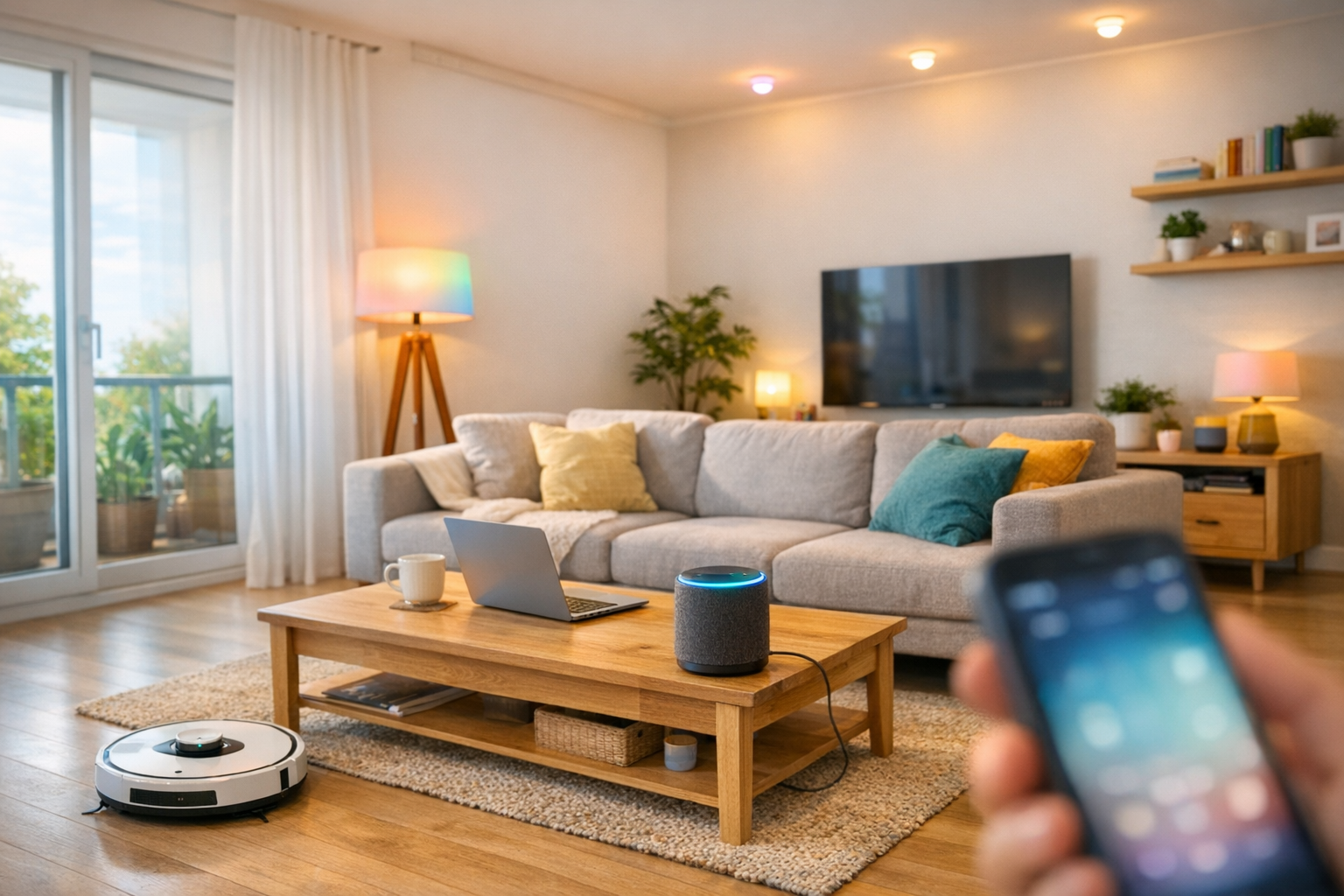
Step into a smarter home where sleek gadgets wow your guests and quietly simplify life—until one secret feature changes everything...
Have you ever bought a gadget because it looked like it came from a sci-fi set, then realized it barely helped with anything? That gap between cool and useful is where a lot of smart home gear falls apart. The good news is that future-ready home gadgets that feel futuristic but are actually practical do exist, and they’re getting easier to find. The trick is knowing what makes a device feel advanced while still earning a place in your daily routine. That’s what this guide is here to sort out.
What Makes a Home Gadget Feel Futuristic and Practical?
Future-ready home gadgets that feel futuristic but are actually practical usually do one simple thing well. They remove friction from everyday life. A device feels futuristic when it responds before you have to think too much, like lights that turn on when you walk in, a thermostat that adjusts when the room is empty, or a display that answers a question without making you stop what you're doing.
That feeling comes from a mix of automation, voice control, app control, sensors, compact design, and energy efficiency. Automation handles repeat tasks. Voice and app control let you change things from across the room or away from home. Sensors detect motion, temperature, air quality, or occupancy. Compact design keeps the tech from taking over the room. And energy efficiency matters because a gadget that wastes power doesn't feel very advanced for long.
Adoption has sped up in the last few years because the basics got better. Wi-Fi and Bluetooth are still the most common ways these devices connect, and both are familiar enough for most homes now. Matter, a cross-brand smart home standard that launched in 2022, is also making setup and compatibility less messy. So the futuristic part isn't just the glow or the clean shape. It's the calm, low-effort way the gadget fits into real life.
The Future-Ready Categories That Actually Improve Daily Life
Smart lighting that adapts to the day
Smart lighting is often the first thing that makes a home feel different. Not flashy. Just smarter. In a small apartment, motion sensing can light up a hallway at night with a low warm glow, so you don't get hit with harsh brightness. In the morning, scheduled lights can slowly brighten like a sunrise, which feels gentler than a phone alarm screaming from the nightstand.
Color tuning helps more than people expect. Cooler light can make a kitchen or desk feel crisp during work hours, while warmer light in the evening helps a room settle down. In shared homes, scenes in an app can switch multiple bulbs at once, so one tap changes the mood for dinner, movie time, or bedtime.
And because LEDs use less power than older bulbs, smart lighting often saves energy while looking cleaner. That's the sweet spot.
Robot vacuums that handle repeat cleaning
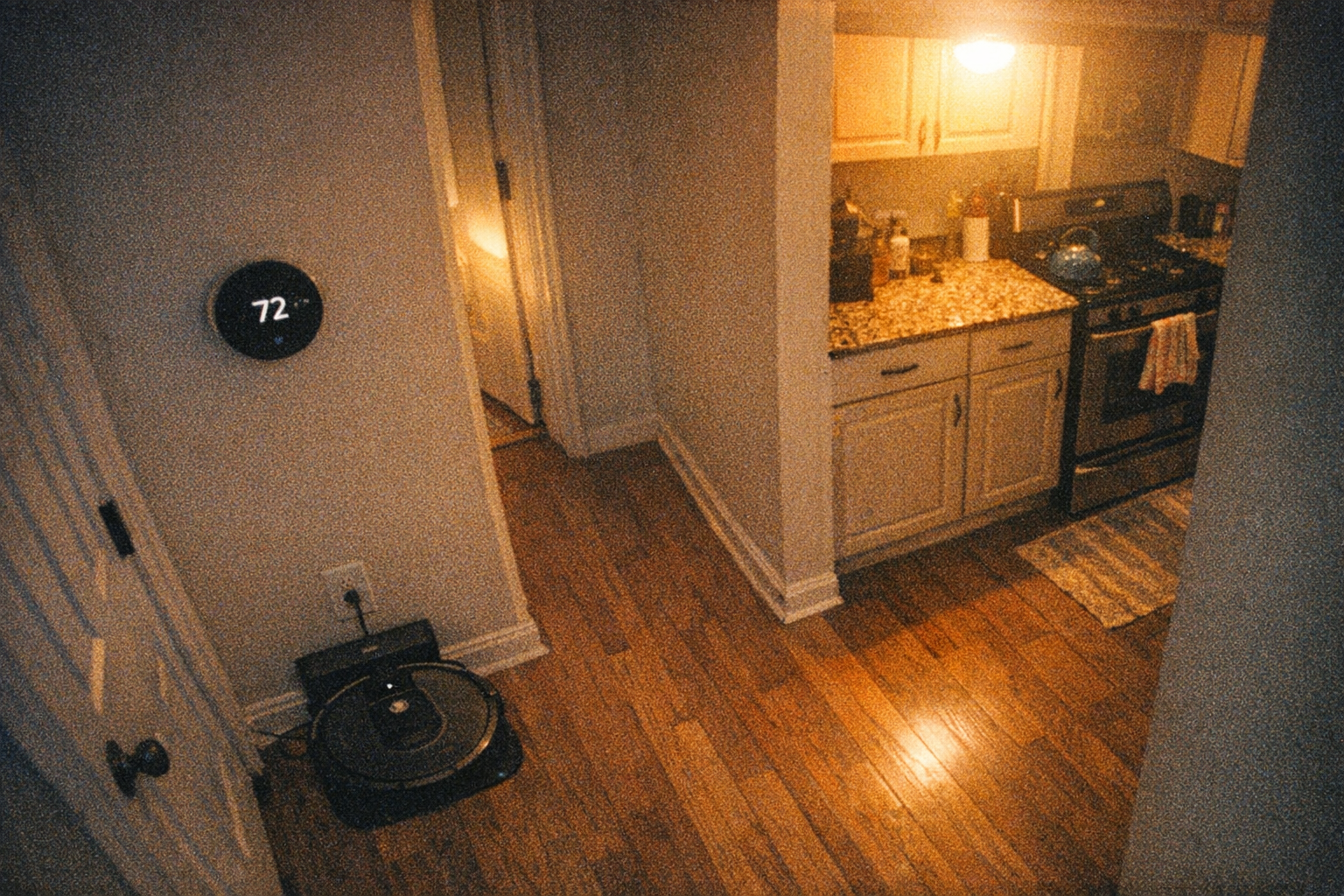
Robot vacuums are a strong example of future-ready home gadgets that feel futuristic but are actually practical because they take over a chore that never really ends. In a small apartment, a compact robot can map the floor, run while you're out, and return to its dock without much input. You come home and the dust is gone. Simple, but kind of magical.
In family homes, they help most with the daily layer of crumbs, pet hair, and hallway dirt that builds up fast. Scheduled cleaning keeps the floor from reaching that gritty stage under bare feet. Models with room mapping can avoid the nursery during nap time or focus on the kitchen after dinner.
They do have limits. Clutter can stop them. Thick rugs, cords, and tall thresholds still trip some models up. But if your floors stay fairly clear, they cut down the need for constant sweep-ups in a very real way.
Smart thermostats and climate control
Climate control often feels invisible until it's wrong. Too warm during a video call, too cold at 2 a.m., too stuffy by noon. Smart thermostats help by learning patterns or following schedules, then adjusting heating and cooling around how the home is actually used.
For work-from-home setups, that can mean keeping one zone comfortable during office hours instead of heating the whole house all day. In a family home, occupancy sensing can lower energy use when everyone leaves, then bring the temperature back before anyone returns. Remote control from an app also helps with uneven routines. Late train, weekend trip, surprise school closure. Life happens.
The practical win is comfort with less waste. And because heating and cooling are a major part of home energy use, even small adjustments can matter over time.
Air quality monitors and invisible comfort
Air quality monitors don't look dramatic, but they can change how a home feels in ways you notice fast. These devices track things like CO2, tiny particles in the air, humidity, and VOCs, which are gases released by paint, cleaners, cooking, and other household items. When levels drift, the monitor shows you what your body may already be feeling, like a heavy room, dry throat, or afternoon fogginess.
In bedrooms, they can reveal stale overnight air or humidity that makes sleep less comfortable. In kitchens, they can show how fast cooking affects air after frying or oven use. In home offices, high CO2 can make focus feel weirdly harder. I once wondered why a room felt dull by mid-afternoon. Turns out, it just needed fresh air.
That kind of feedback is practical because it leads to simple fixes. Open a window, run a fan, turn on a purifier, adjust a humidifier.
Smart displays and contactless controls
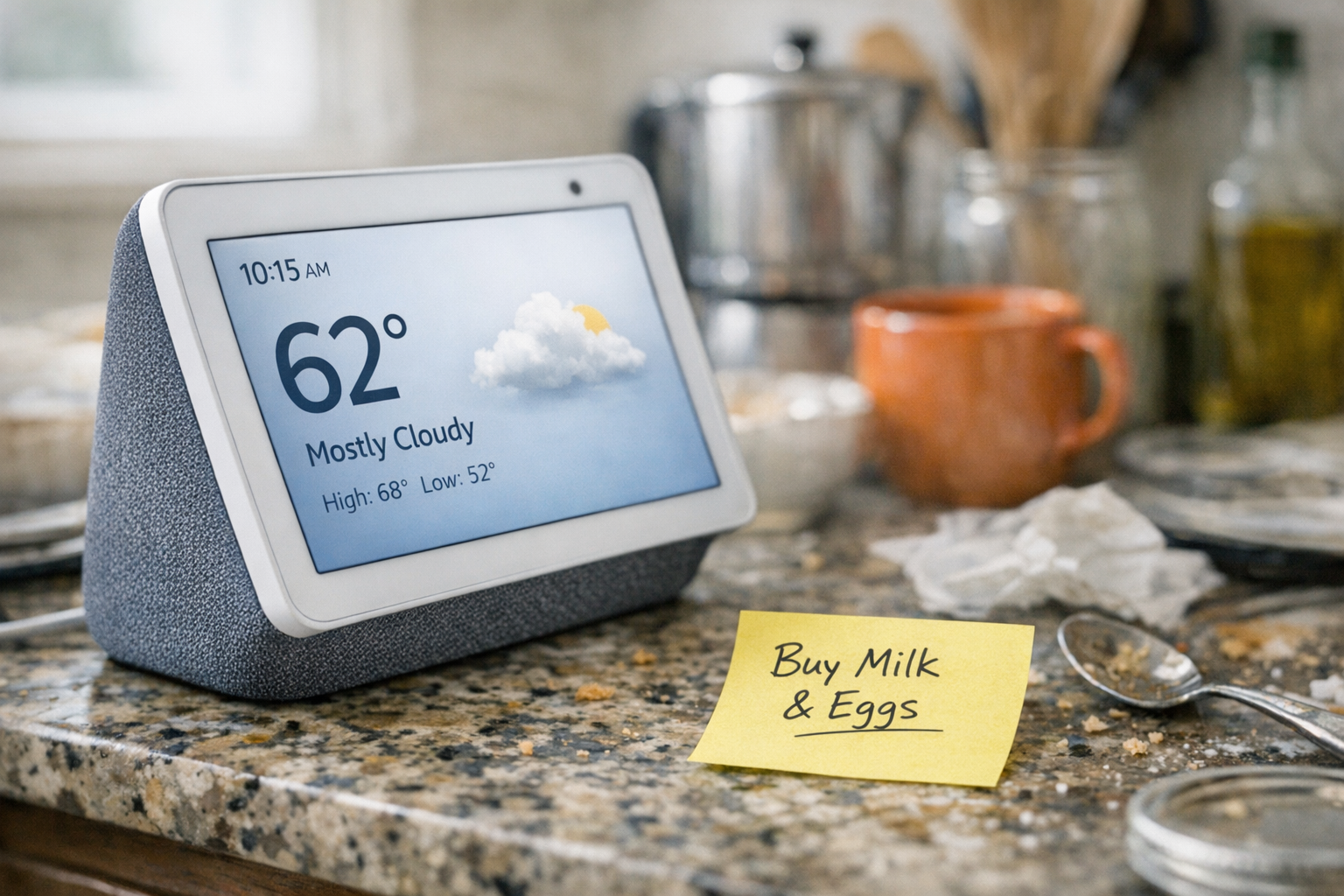
Smart displays and touch-free controls make a home feel modern because they reduce little interruptions. A smart display on a kitchen counter can show timers, weather, a shared calendar, recipe steps, and doorbell video in one place. You don't have to keep grabbing your phone with wet hands while cooking. That alone is useful.
In family homes, shared dashboards help with reminders, chores, and music control without adding visual mess. In smaller spaces, voice assistants can turn off lights, start white noise, or answer quick questions without taking up much room. Contactless triggers, like motion sensors or voice commands, also help with accessibility. That's a big deal.
The best versions fade into the background when you're not using them. Some displays dim down or show almost nothing until needed, which keeps the room feeling clean instead of crowded with screens.
How to Judge Practicality Before You Buy
Start with the problem, not the product
The smartest buy usually starts with a small daily annoyance. Maybe it's wasted time vacuuming crumbs, bad light during early mornings, stale air in a bedroom, or always forgetting to adjust the heat before leaving. If the problem is real and happens often, a gadget has a clear job to do.
But when the buying decision starts with looks alone, regret shows up fast. A sleek device can still become drawer clutter if it doesn't solve anything.
Use a quick practicality checklist
Before buying future-ready home gadgets that feel futuristic but are actually practical, run through this quick check:
- Setup time: Aim for devices you can install in under 30 minutes, unless it's something built into HVAC or wiring.
- Compatibility: Check Wi-Fi band support, Bluetooth, Matter support, and whether it works with your current phone or smart home app.
- Maintenance: Look for things like filter changes, brush cleaning, charging habits, or calibration needs.
- Privacy: Make sure the app offers clear controls for microphones, cameras, location data, and cloud storage.
- Learning curve: The best gadget should feel obvious after a day or two, not like a side hobby.
- Real use case: Ask one blunt question. What task will this improve at least three times a week?
That last point matters most. Really.
Watch for hidden costs and friction
Some products feel advanced right out of the box, then slowly become annoying. Subscription fees can lock basic features behind a paywall. Cheap batteries need replacing too often. Filters and parts may be hard to find after a year. And bad apps can ruin otherwise good hardware.
Also check the firmware update policy. That's the software support a device gets after launch. If updates stop early, security and compatibility can fade with them. Well, actually, this is where many smart gadgets age badly. A futuristic look can't fix weak long-term support.
Futuristic Design Versus Everyday Usability
A gadget can look futuristic without turning your home into a tech showroom. The best designs use clean lines, compact shapes, hidden controls, and soft light in a way that feels calm. Not cold. A low-profile air monitor on a shelf, a thermostat with a simple dial, or a display that goes dark when idle can all look advanced while staying easy to live with.
Minimal interfaces work best when they remove noise, not clarity. One-button controls, subtle status lights, and legible screens are often more useful than glossy touch panels covered in icons. Have you ever tapped a beautiful screen three times just to do one basic thing? That's the point. Style should reduce effort, not create it.
Material choice matters too. Matte finishes, neutral colors, and wall-mounted forms tend to blend into a room better than bulky plastic shapes. The futuristic effect comes from restraint. When design feels light and intentional, the technology seems more advanced because it isn't shouting for attention.
Current Smart-Home Adoption and Compatibility Trends
Future-ready home gadgets that feel futuristic but are actually practical are more common now because the smart home market has matured. In the last few years, setup has become simpler, apps have improved, and common standards have reduced some of the early trial-and-error. Wi-Fi remains the default for many devices that need internet access, while Bluetooth is common for quick pairing and shorter-range control.
A major shift came with Matter in 2022, introduced by the Connectivity Standards Alliance. Matter is meant to help devices from different brands work together more smoothly. That matters, no pun intended, because most homes don't buy everything from one company. A household might use one brand for lighting, another for climate, and another for speakers or displays.
Better compatibility makes upgrades less risky. It also helps shared households, where different people use different phones, voice assistants, or apps. And it lowers the odds of getting stuck in one closed system. When a gadget works across common platforms, it tends to stay useful longer. That's not hype. That's practical future-proofing.
Final Words

The best future-ready home gadgets that feel futuristic but are actually practical don't just look advanced. They quietly save time, cut repeat effort, and make a home feel easier to live in.
That's the real test. Not how dramatic the product page looks, but how naturally it fits into mornings, work hours, dinners, and late nights.
If a gadget solves a real problem, works with your setup, and stays simple after the first week, it's probably worth your attention. The future at home should feel calm, useful, and a little bit effortless.
FAQ
What makes a home gadget feel futuristic and practical at the same time?
It combines automation, smart controls, sensors, and efficient design with a clear daily benefit. If it saves time, reduces effort, or improves comfort without adding hassle, it hits both goals.
How do I choose futuristic home gadgets that are actually useful every day?
Start with a real problem in your routine, then check compatibility, maintenance, privacy controls, and ease of use. The best option should fit your current setup and feel simple within a day or two.
Do futuristic smart home gadgets need a lot of setup or maintenance?
It depends on the category, but the most practical ones should be quick to set up and easy to maintain. Devices that use standard Wi-Fi, Bluetooth, or Matter usually connect more smoothly and only need occasional updates or basic upkeep.